
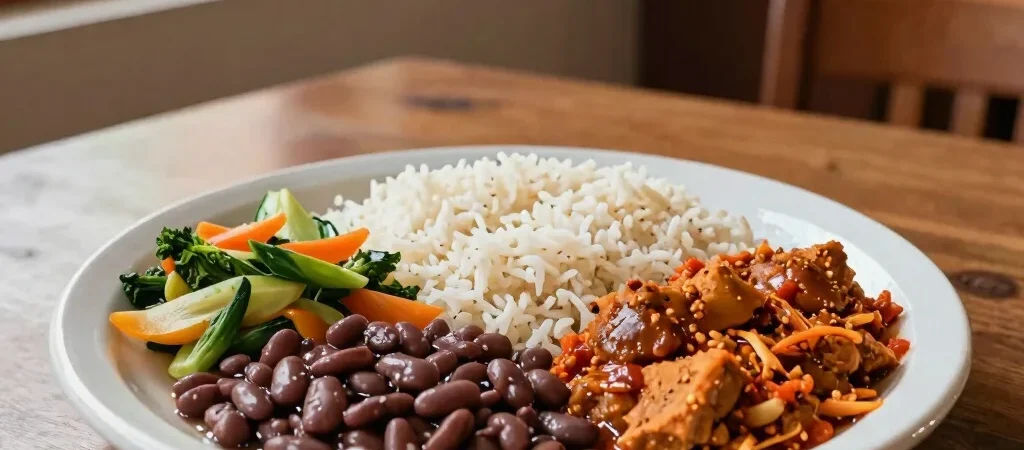
Your first meal in Salvador does not have to be a culinary project. If you want something straightforward between plans, look for a lunch counter or restaurant serving prato feito, a set plate, or comida a quilo, where food is priced by weight. The formats are familiar across Brazil, but dishes, ingredients, and serving routines vary from place to place.
Know the menu language
Prato feito, often shortened to PF, usually means a prepared plate with a main item and sides; ask what comes with it if the menu is not clear. At a comida a quilo restaurant, you choose from the buffet and pay according to the weight of the plate, though the house rules and pricing should be checked before you serve yourself. A simple “Como funciona?” is a useful way to ask how the system works.
Ask about ingredients directly
Bahian cooking is known for ingredients such as dendê, or palm oil, and coconut milk, but not every dish uses them and recipes differ. If you have an allergy or dietary restriction, ask about the specific dish rather than relying on a broad description. You can say “Tem dendê?” to ask whether it contains palm oil, or point to a menu item and ask what is in it.
Leave room for another stop
After lunch, you can explore a small snack or a local specialty without expecting one meal to represent all of Bahia. Acarajé, sold by baianas at street stands, is one option to look for; ask what fillings are available and how the stand serves it. Eat at a pace that suits your day, and treat a recommendation as a starting point for your own preferences.